When Technology Opens an Opportunity the Institution Has to Learn to Use
Installing a technology does not automatically create the capability an institution intended to acquire. MGE’s experience with pneumatic transport systems revealed how technology, operating conditions and institutional practice must develop together for the intended opportunity to become real.
An institution may invest in a new technology because something in the operation needs to change.
The technology may be capable of doing exactly what it was designed to do. It may be installed correctly, commissioned and ready for use. Yet the expected improvement can still take longer to appear than anyone anticipated.
This is not unusual.
A new capability enters an operation that has already developed its own routines, responsibilities, dependencies and ways of solving problems. People know how the institution works because they have been working within those conditions for years. The new technology arrives as an additional possibility, but the rest of the operation does not automatically change with it.
MGE encountered this reality while working with pneumatic tube systems.
At first, it is natural to see such a system through its visible function: transporting materials within a healthcare environment. But experience showed MGE that this description is not sufficient to understand the institutional opportunity.
Pneumatic tube system can become an enabling capability within healthcare operations. Its value is connected to the capacity it can release across the operation: reducing non-value-adding movement, supporting timely availability of materials, improving staff utilization, and helping the institution design care-supporting processes around a more reliable flow of essential items.
The question, therefore, is not simply how efficiently something is transported. It is what the institution can improve when that movement is no longer a constraint on the operation.
This became visible across different operating environments.
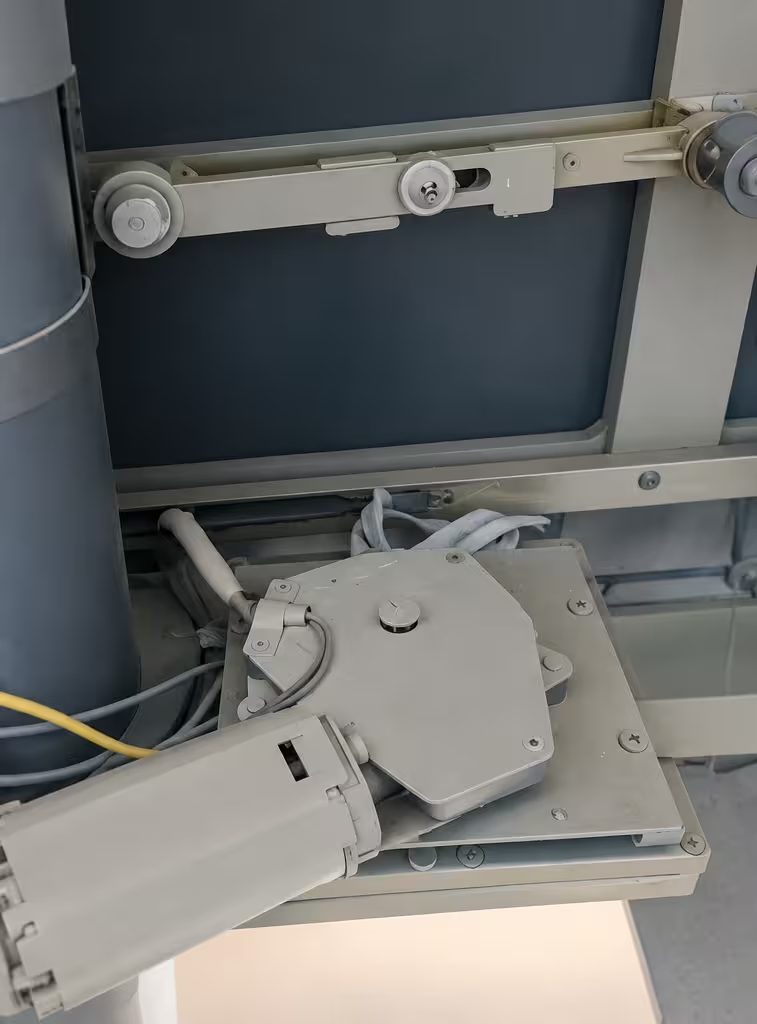
In one, a system had been installed many years earlier. Over time, its infrastructure had deteriorated, support arrangements had changed and the way people interacted with the system had changed with them. Some of its stations were being used for purposes other than transportation. The system existed, but the capability it was intended to provide had progressively disappeared from the operation.
In another environment, a newer system was available, but its use had not yet become part of the normal operating rhythm. Procedures around its use were still developing. Staff were adapting to a different way of working, while the surrounding operation had largely retained its previous patterns.
Neither situation could be understood simply by asking whether the equipment worked.
The more useful question was what had happened between having the technology and realizing the capability it was intended to enable.
This is where MGE’s understanding developed.
Technology can enable a change in institutional capacity, but the capability does not exist in isolation from the operation. It has to be designed for the institution’s actual and future conditions, integrated with its operating procedures, and supported by the people and arrangements through which the operation functions.
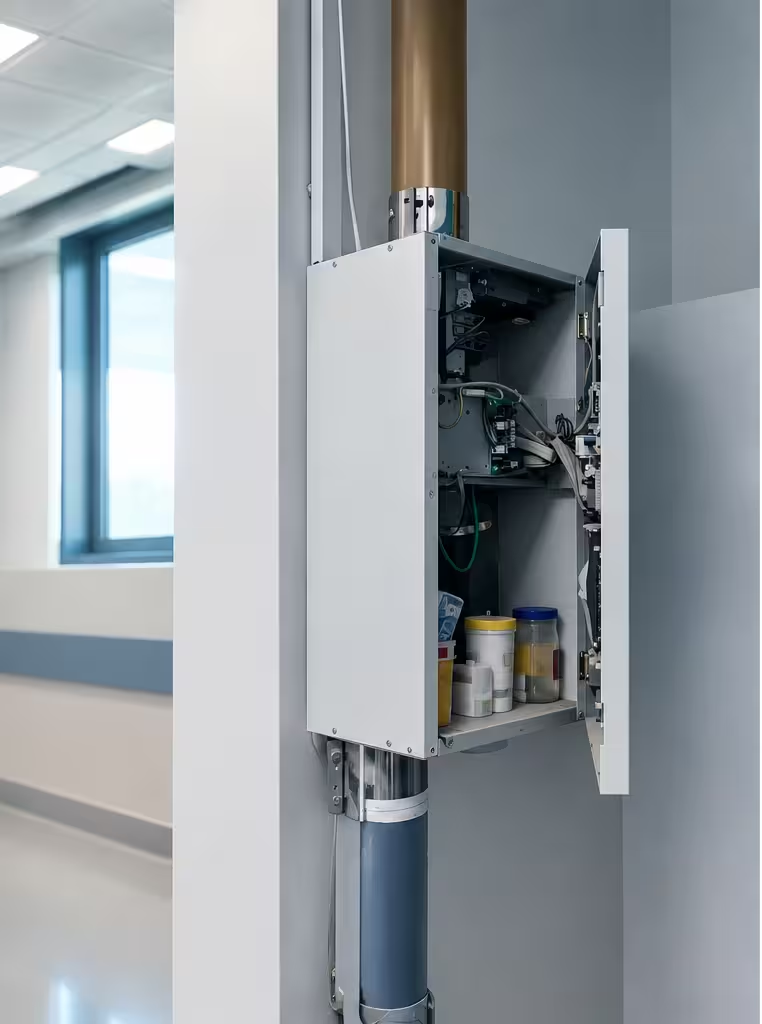
For Pneumatic tube system, that can mean more than installing stations and connecting infrastructure. It can mean establishing the operating protocols, responsibilities, infection-control arrangements, user practices, maintenance and support conditions, and workflow changes required for the capability to function as part of care delivery.
Explore the PTS Intervention →
These are not optional additions to the technology. They are the non-negotiable components of making the capability operational.
MGE’s experience also showed that the institution may need to understand the opportunity differently once the capability becomes available. A technology can remove a constraint that the previous operation had learned to live with. When that happens, simply preserving the old way of working leaves part of the opportunity unrealized.
The capability therefore has to be considered in relation to both the operation that exists today and the capacity the institution needs to build for tomorrow.
This is why MGE has increasingly moved deeper into the institutional conditions surrounding technology interventions. Not because technology was ever considered an end in itself, but because experience demonstrated how much of the intended outcome depends on what surrounds the technology.
The technology is an enabler.
The institutional outcome is what matters.
For Pneumatic tube system, the opportunity is therefore not defined by transportation alone. It lies in what becomes possible for the healthcare operation when a previously constrained function can be performed with greater reliability and within a deliberately designed operating model. MGE’s experience showed that realizing this opportunity requires the institution and the enabling capability to develop together—so that what the technology makes possible becomes part of how the institution delivers care, uses capacity and performs its work.