
PTS TECHNOLOGY | Powered by Pevco™
A Technology Relationship.
One Shared Purpose.
MGE’s technology relationships are built around the institution’s outcome—not the technology itself.
The Pneumatic Tube System capability MGE implements is engineered, manufactured, and supported by a technology partner with direct control over its technology and production.
The institution’s outcome is the only measure.
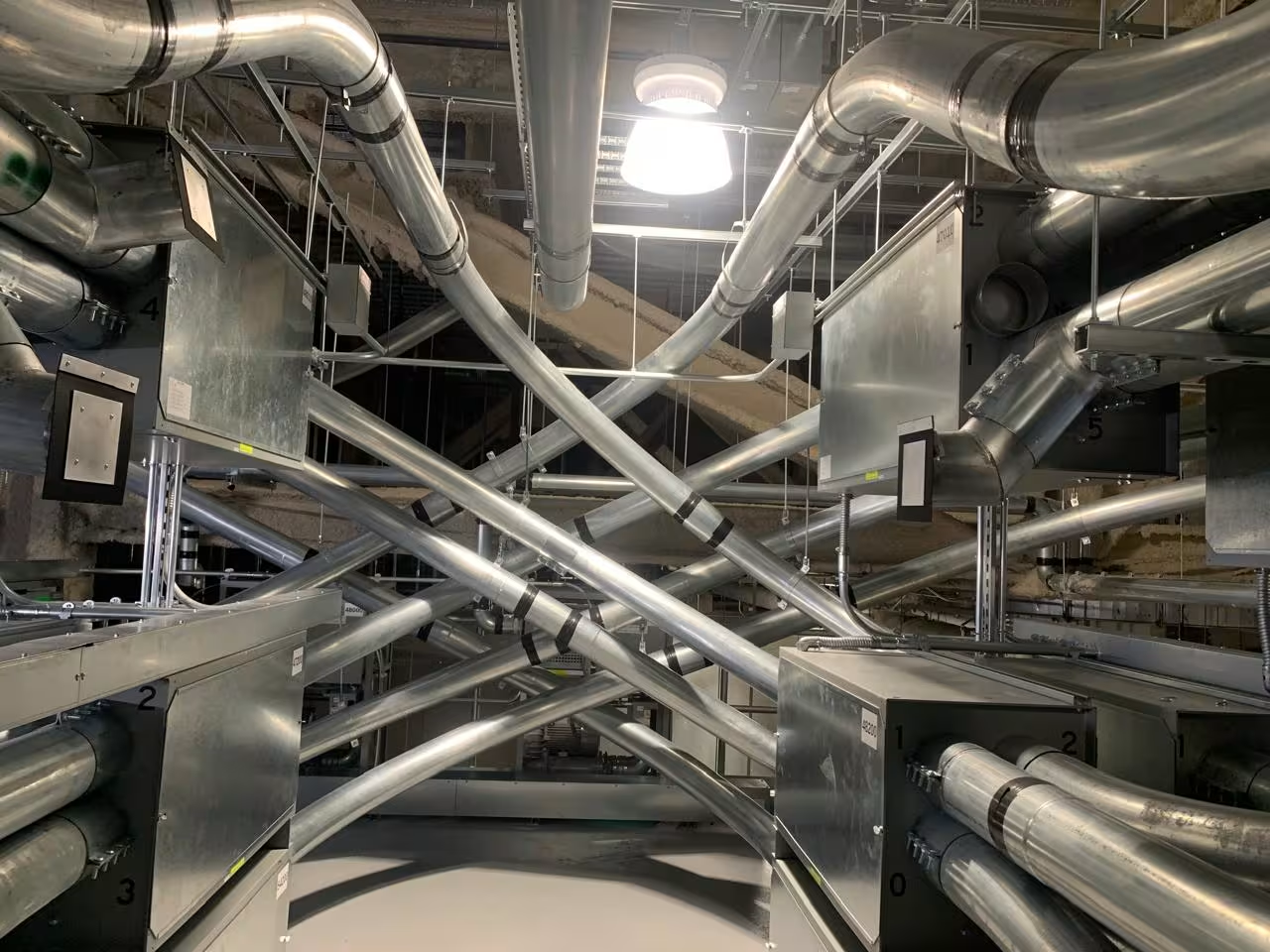
A technology relationship should serve the institution.
Technology becomes part of a hospital’s permanent operating infrastructure. The relationship behind that technology therefore matters as much as the specification.
Technology ownership
The manufacturer owns and controls the technology behind the system.
Engineering continuity
Engineering, configuration, production and technical knowledge remain connected.
Institutional independence
Knowledge is transferred so the institution can increasingly operate and maintain the capability itself.
The relationship exists to strengthen institutional capability—not create dependence.
Experience built around healthcare.
1978
Healthcare-specific PTS experience
900+
Hospitals using PEVCO systems
3
Continents
3rd
Generation family ownership
PEVCO has focused exclusively on healthcare pneumatic tube systems since 1978, with systems operating across hospitals in three continents.
That accumulated experience becomes useful when it is examined alongside the operating conditions of the institution—not imposed as a template.
Experience becomes valuable when it informs judgment.
Manufacturing — Baltimore, Maryland, USA
Control from engineering to production.
Engineering
Configuration
Manufacturing
Quality Control
Technical Support
PEVCO develops and manufactures its PTS technology within its own facilities, keeping engineering, configuration, production and quality control under the manufacturer’s control.
Connected engineering
Controlled production
Consistent system
This matters when the technology becomes part of a hospital’s permanent infrastructure, because engineering decisions, manufacturing and technical knowledge remain connected.
The system is engineered as durable infrastructure—not as a capability dependent on frequent replacement.
Proven experience. Institution-specific judgment.
PEVCO EXPERIENCE
Proven technical knowledge
Experience accumulated across healthcare environments provides a technical reference for the questions being assessed.
MGE + INSTITUTION
Institution-specific conditions
Protocols
Workflow
Clinical requirements
Operating conditions
APPLICATION
What is appropriate here
The resulting application reflects the institution’s own requirements, operating conditions and intended outcome.
Not another hospital’s technology.
Proven experience becomes practical judgment.
The objective is not to transfer another hospital’s solution. It is to determine what is appropriate here.
Risk is assessed. Managed. Mitigated.
01 — Question the configuration
When a proposed configuration is inappropriate, it is reconsidered.
02 — Challenge unnecessary components
Additional equipment is not justified simply because it is available.
03 — Develop alternatives
Where a configuration introduces unacceptable risk, an alternative is developed.
Institutional condition
Risk identified
Configuration challenged
Alternative considered
Appropriate solution
The technology does not dictate the solution.
Each component earns its place by contributing to the institutional outcome.
What the relationship means for your institution
Technology engineered for durability
Durable materials and long-life infrastructure reduce dependence on frequent replacement.
Controlled manufacturing
Engineering, production and quality remain under the manufacturer’s control.
Continuing technical support
Manufacturer knowledge remains available throughout the system lifecycle.
Risk-based engineering
Configurations are considered against actual clinical and engineering conditions.
Growing institutional capability
Knowledge is transferred so institutional teams can operate and maintain the system with confidence.
The relationship continues after commissioning.
Implement
Operate
Understand
Maintain
Improve
Technical knowledge remains available when questions arise, while relevant knowledge is transferred to the institution’s own teams.
Problems can be addressed collaboratively without making the institution permanently dependent on the technology provider.
Support should increase institutional independence over time.
Confidence extends beyond the specification.
The performance of a PTS depends not only on its architecture, but on the experience behind the technology, the evidence accumulated across healthcare environments, and the engineering relationship supporting its implementation.